Business backpacks with a logo - how to choose a functional B2B gift?
The classic leather briefcase is fading into obscurity. In the era of hybrid work and flexible management models, its place has been taken by the modern backpack. For many professionals, it has become a mobile office in which they safely transport laptops, documents, and electronics. From a company's perspective, promotional and business backpacks are currently one of the most strategic categories of corporate gifts.
However, choosing the right backpack with a company logo is more than just a decision about color and print. It is an investment in the daily comfort of employees and long-term brand image building in the public space. In this guide, we will analyze the key features of modern backpacks and advise on what to look for to avoid unsuccessful investments.
Table of Contents
-
Why is a business backpack a good image investment?
-
Key technologies and features of modern backpacks
-
Hypothetical scenario: Backpacks in onboarding kits
-
Common mistakes when ordering promotional backpacks
-
Best practices: How to professionally mark backpacks?
-
Summary
-
Frequently Asked Questions (FAQ)
Why is a business backpack a good image investment?
Introducing backpacks to a gift strategy or employer branding activities is based on one simple principle: high utility. A gadget that is used every day during commutes to the office, at airports, or during business trips naturally exposes the company logo to dozens or even hundreds of people every day.
For employees, a solid laptop backpack is an expression of the employer's care for their comfort and equipment. On the other hand, in relations with clients (e.g., as a gift after finalizing a large contract), it becomes proof of your organization's modern and pragmatic approach. A valuable item rarely ends up in the closet – it becomes a natural part of a manager's daily gear.
Key technologies and features of modern backpacks
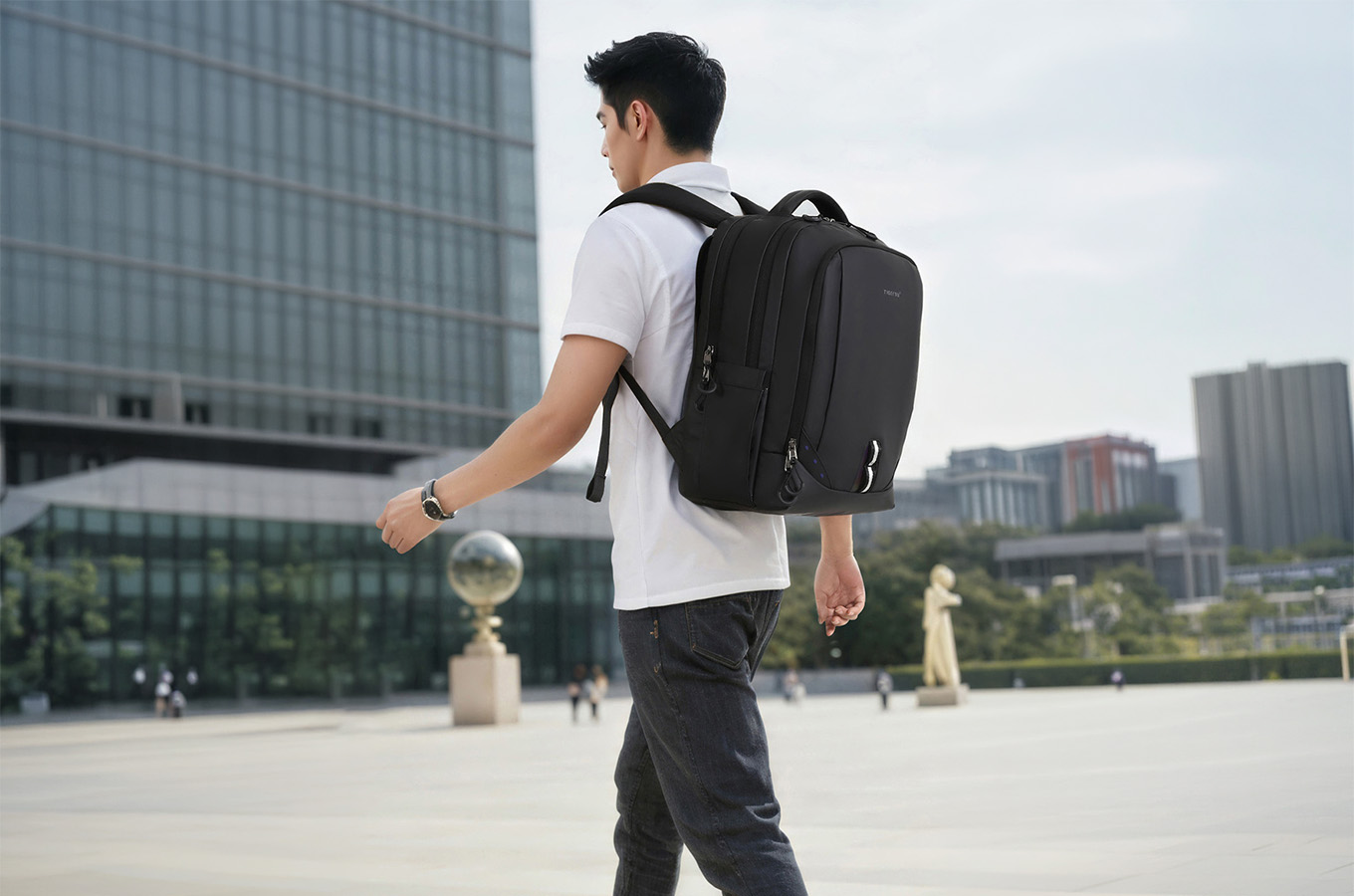
Catalogues are bursting at the seams with various models, but in the B2B sector, specific conveniences count. What gives a backpack a "premium" status?
Anti-theft systems and TSA locks
Data security is a priority. Urban anti-theft backpacks are equipped with hidden zippers that are almost impossible to access from the outside while being worn. Many premium models designed for frequent travelers additionally have TSA combination locks as standard, facilitating hassle-free airport security checks.
RFID blocking pockets
This is almost a mandatory standard today. Specially shielded pockets prevent unauthorized data reading from payment cards and biometric passports. For people spending time in crowds or at industry trade fairs, this is an invaluable feature.
Integrated USB ports
Working on the run quickly drains smartphone batteries. Modern backpacks offer external USB ports (and increasingly also USB-C). The user places their own power bank – or a promotional power bank included in the set by the company – inside a special pocket and can conveniently charge the phone without removing the power source.
Hard Shell design and Expandable system
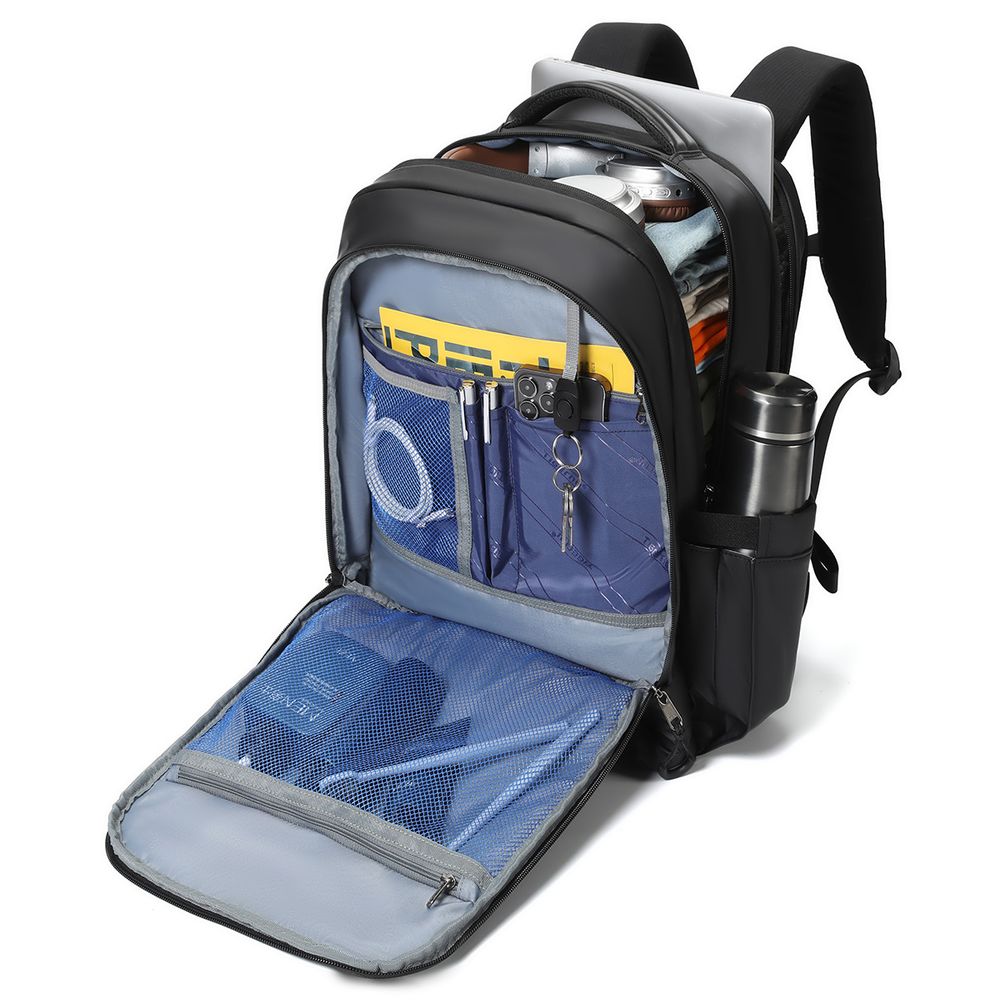
Protecting delicate electronics requires appropriate materials. Models equipped with a hard plastic front (Hard Shell) protect the contents against impacts and crushing. In turn, expandable backpacks with 180-degree opening allow you to increase capacity, transforming into functional hand luggage for short business trips.
Hypothetical scenario: Backpacks in onboarding kits
Let's consider how a strategic approach to backpacks can affect employee experiences. Consider a hypothetical scenario in an IT company that regularly hires new specialists.
Until recently, as part of the so-called Welcome Pack, this company gave new employees a package consisting of a mug, a lanyard, a thin notebook, and a few pens. The cost of such a set was not small, but the value perceived by the programmers remained low. These sets often ended up at the bottom of desk drawers.
As part of a brand refresh (employer branding), the HR department decided to make a change. Small gadgets were abandoned, and the entire onboarding budget per employee was allocated to one specific item: a high-quality, waterproof laptop backpack with a reinforced carrying system.
In this model, on their first day, the new employee receives a company laptop already packed in a corporate backpack with a subtly integrated logo. The psychological effect is completely different – the employee feels that the company treats them seriously and cares for their equipment. The backpack becomes an everyday companion in commutes to the office, naturally building brand awareness in the local community.
Common mistakes when ordering promotional backpacks
The decision to implement backpacks into a strategy is the first step. The next is to avoid costly stumbles that can ruin the entire image-building effort.
Ignoring ergonomics and compartment size
Ordering backpacks that only fit 13-inch devices when company employees work on 15.6-inch workstations is a recipe for disaster. Always verify the specifications of the laptop compartment. Also pay attention to the width of the shoulder straps and back ventilation – when transporting heavy electronics, this is crucial for health.
Treating a backpack like a billboard
Nothing lowers the perceived value of luggage like a giant, bright logo printed right in the middle. While this works for school backpacks or bags for mass events, class is what counts in the B2B sector. Too much branding will make an employee or client avoid wearing the product after work hours.
An overly budget approach to zippers and materials
A weak zipper is the first thing that fails in bags and backpacks. By choosing bottom-shelf price solutions, you expose your brand to associations with unreliability. For professional applications, it is worth recommending moisture-resistant materials (e.g., Oxford, ballistic nylon) and reinforced threads.
Best practices: How to professionally mark backpacks?
A business backpack should be a discreet carrier of brand identity. How to achieve this effect technically?
-
Subtle DTF (Direct to Film) print: This method provides very high durability and resistance to cracking. It allows for precise rendering of details, which is ideal when marking business backpacks. It works best placed discreetly in the bottom corner, on a side pocket, or on a backpack strap.
-
Custom pullers (zipper pendants): An interesting and extremely elegant method of personalization is placing the logo solely on metal zipper pendants or rubber finishing elements.
-
Embossing method (if there are leather/eco-leather elements): This is the most classic method, which also perfectly matches the complementary category of elegant business and conference bags.
Summary
Investing in a functional and durable business backpack with a logo is one of the smartest moves in a gifting strategy for employees and key partners. Thanks to the use of modern materials and smart features (RFID protection, TSA systems, hidden zippers), this product goes beyond a simple gadget. It becomes an essential work tool facilitating mobility in the digital world.
If you are planning to compose solid onboarding kits or looking for a prestigious solution for your contractors, the key is to choose a model that responds to the specific nature of their work.
Wondering which backpack model will best fit your company's values, or need advice on marking techniques? Check out our full catalogue of solutions or feel free to directly contact our B2B customer service department so we can prepare an offer tailored to your needs.
Frequently Asked Questions (FAQ)
How is an anti-theft backpack different from a standard one?
Anti-theft backpacks are designed so that the main zipper is located on the user's back side or hidden under a special layer of material. They often have reinforced, cut-resistant walls (e.g., with PE inserts) and dedicated document pockets on the back panel.
Does the USB port in the backpack have its own battery?
Usually, no. A backpack with a USB port is equipped with an external plug and an internal cable. To use it, you must connect your own power bank inside a specially prepared compartment. This allows for easy replacement of the power source depending on needs.